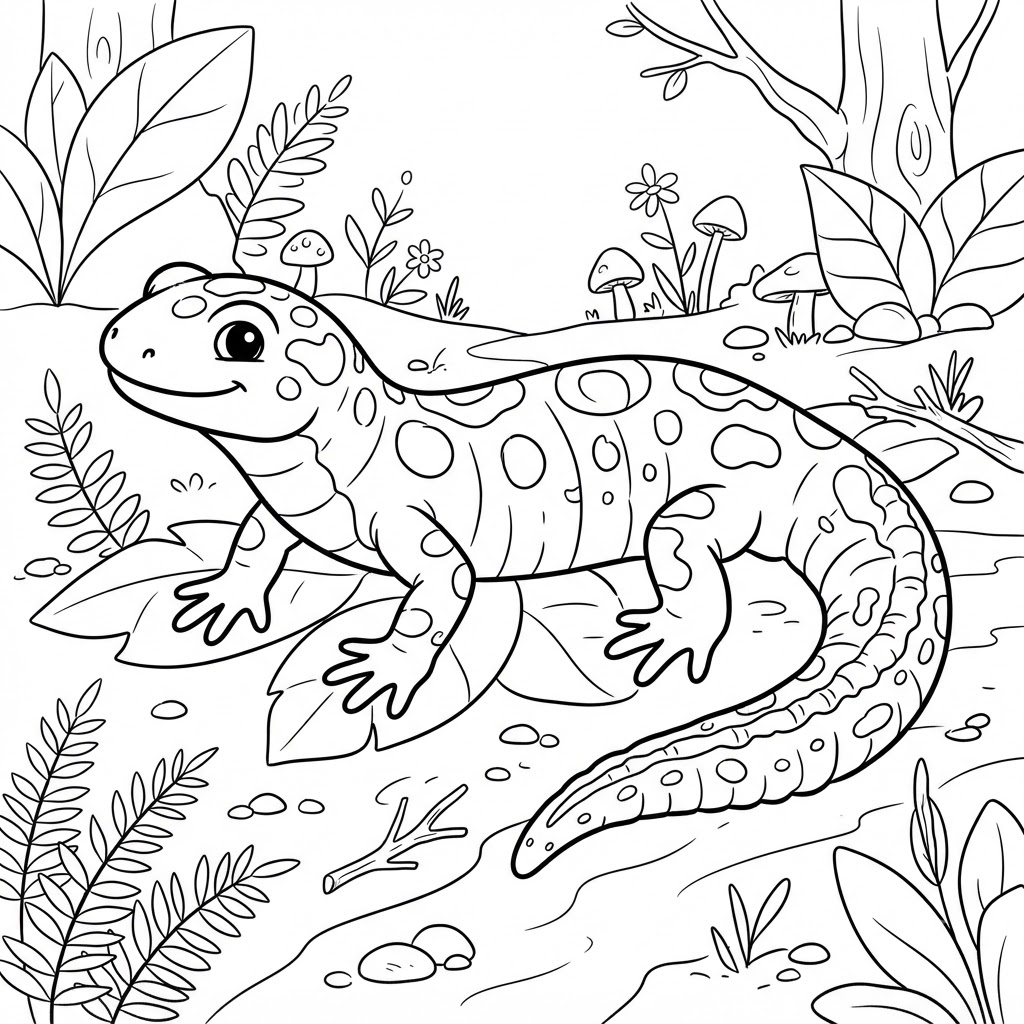


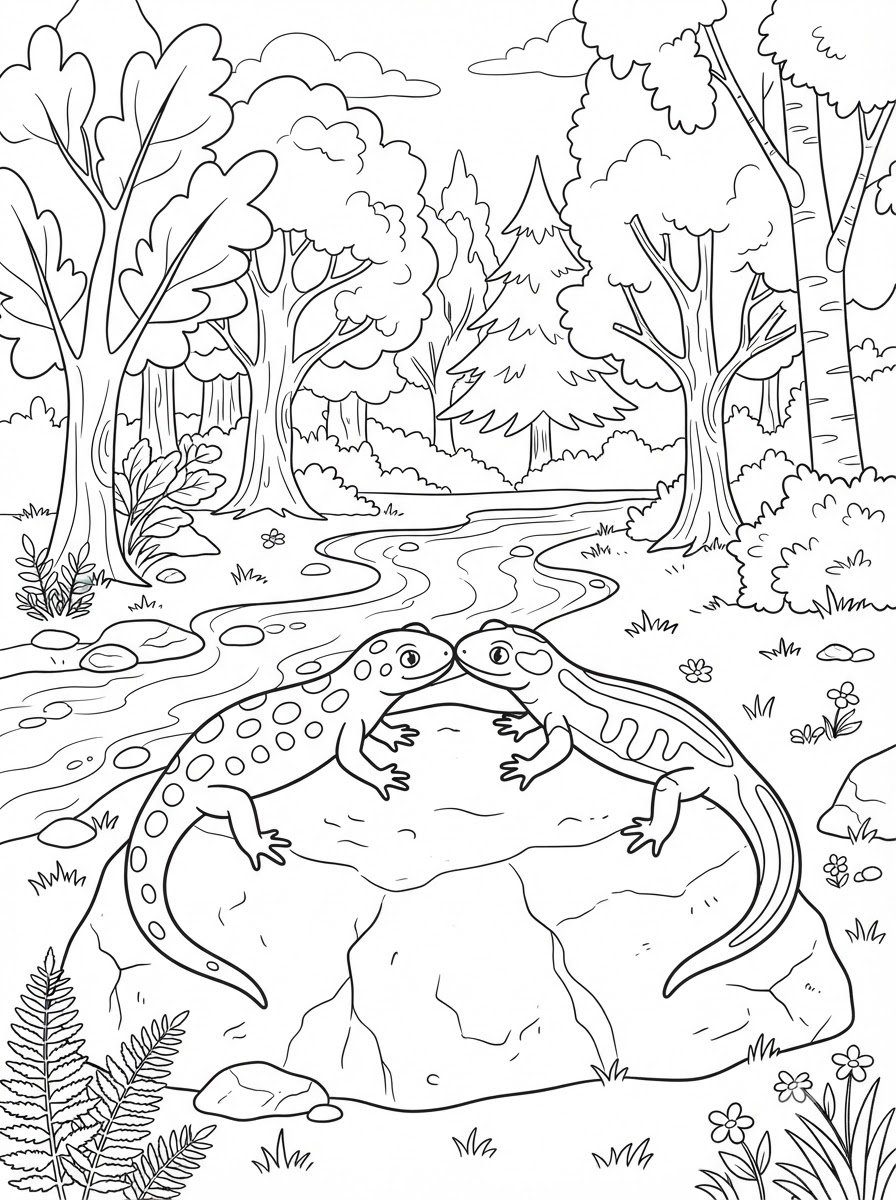
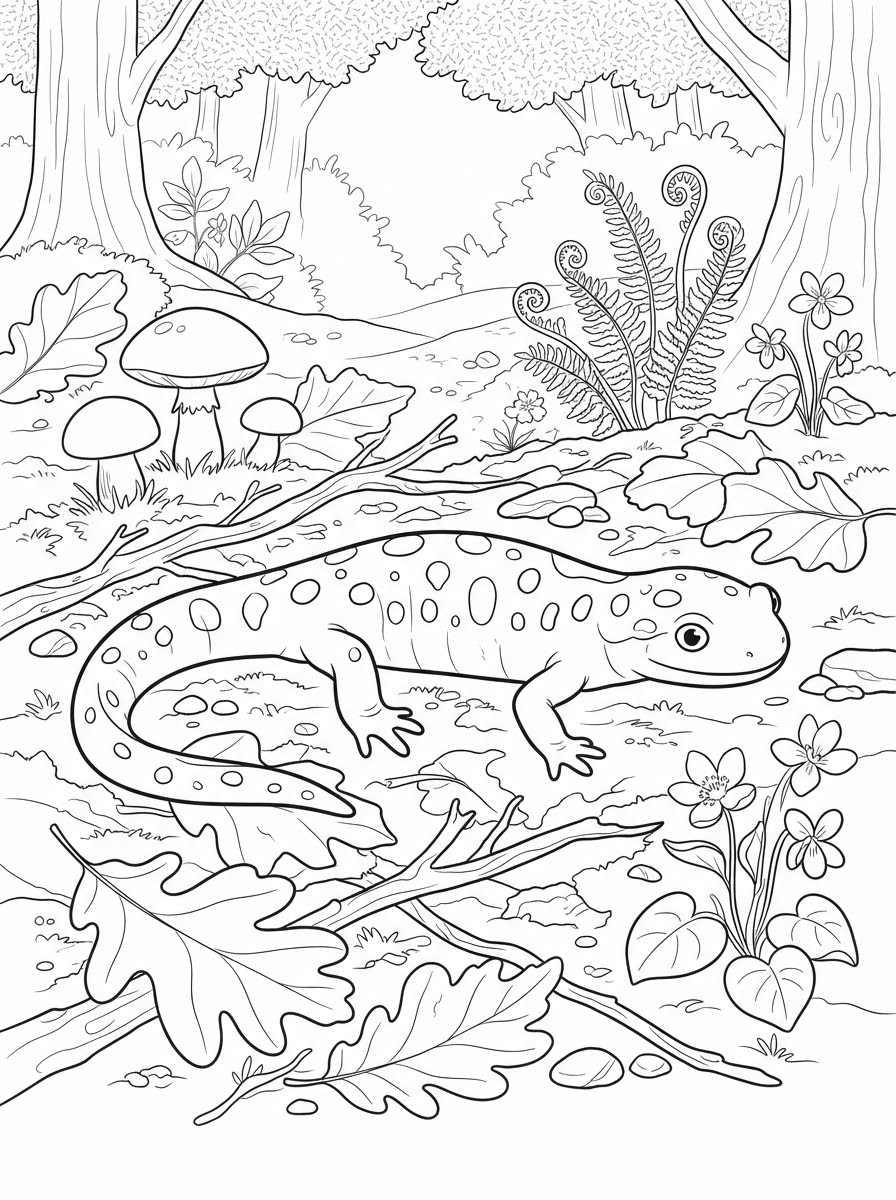
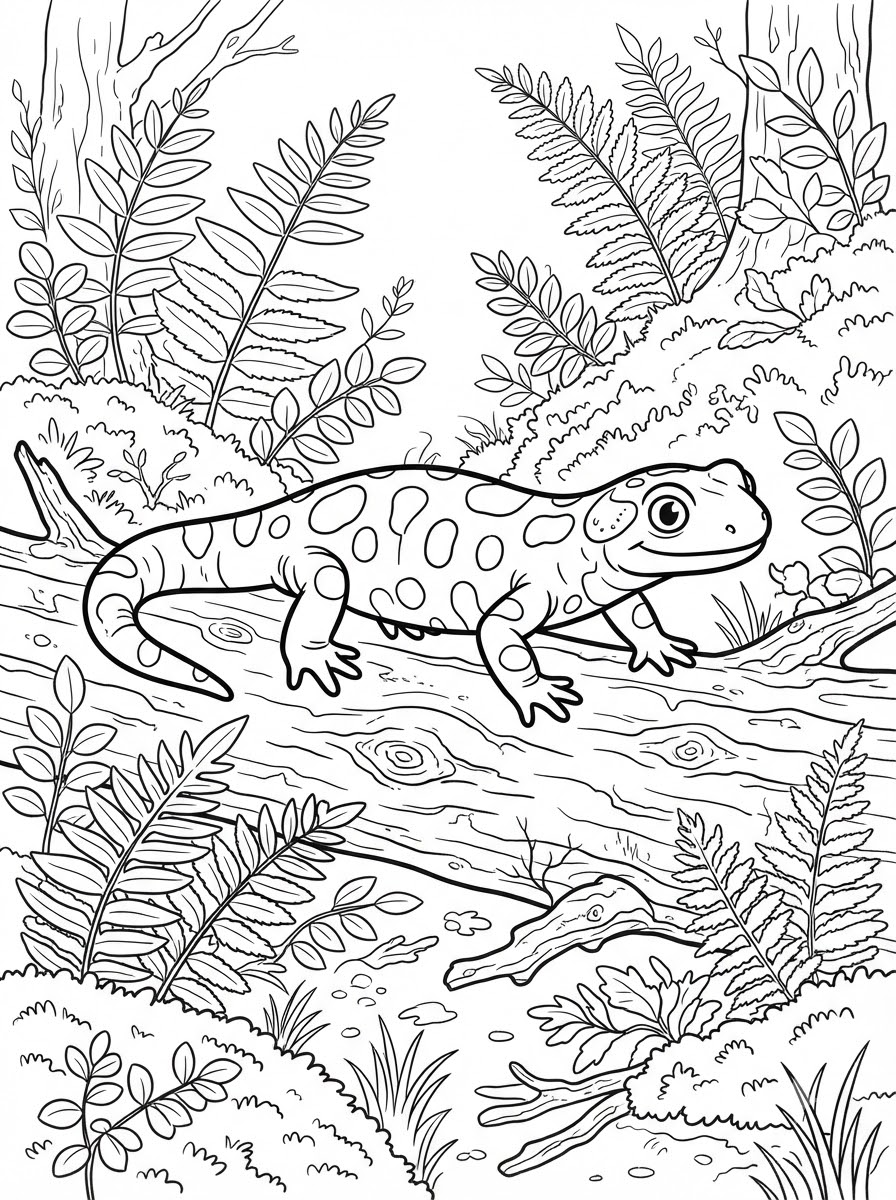
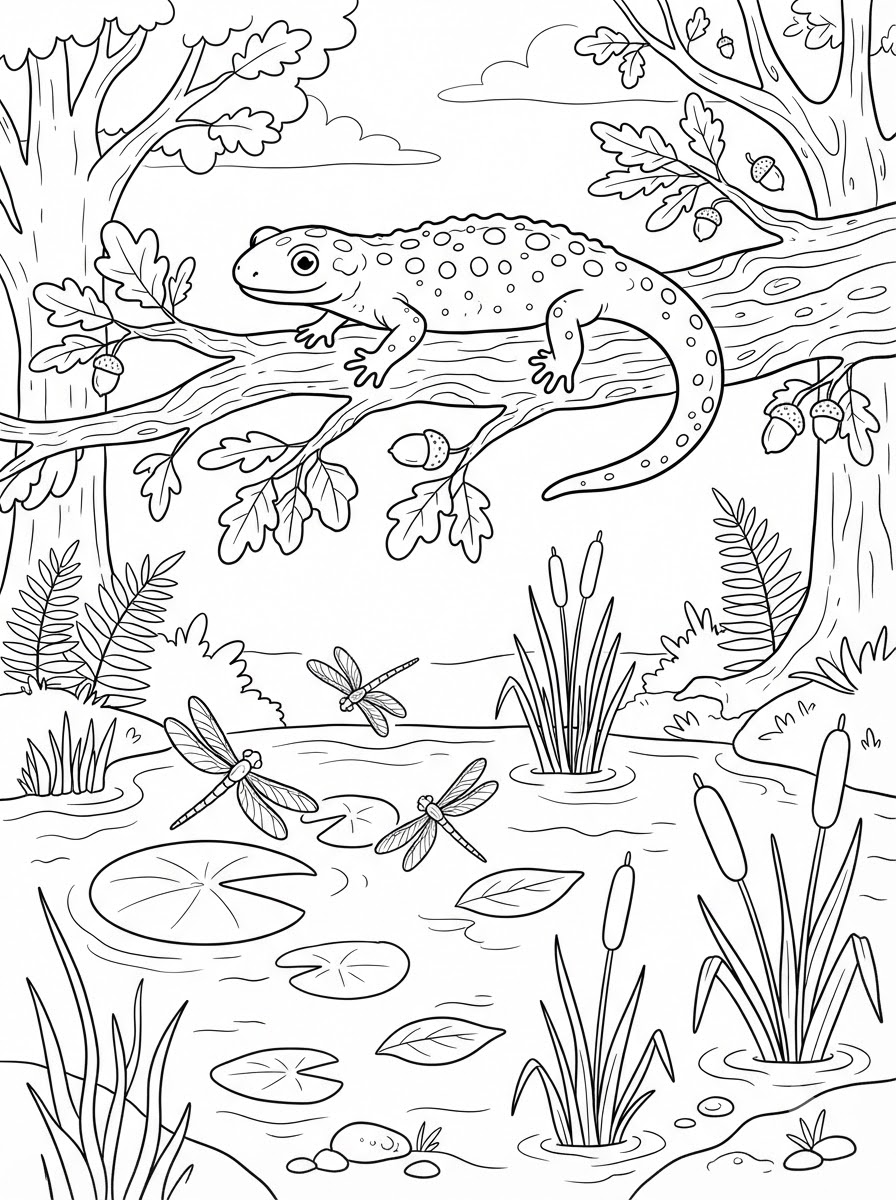
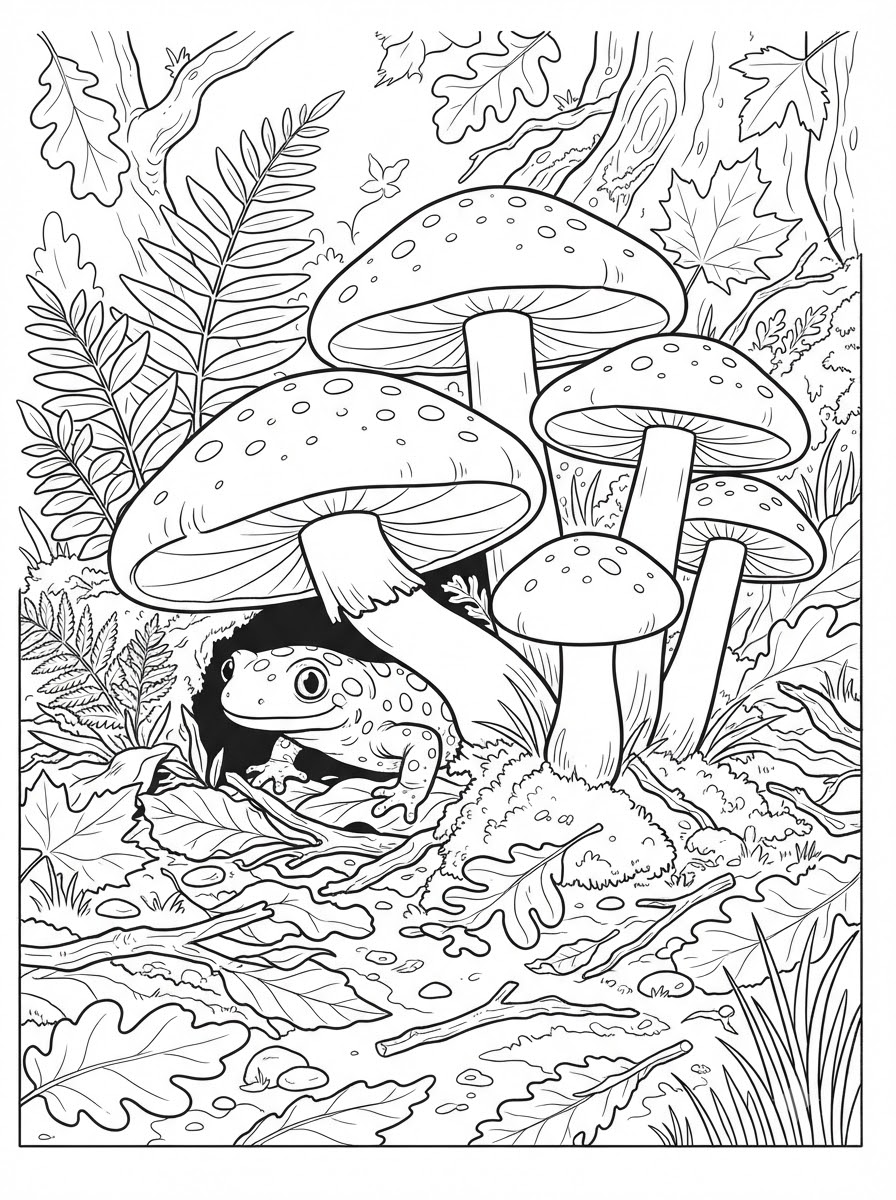
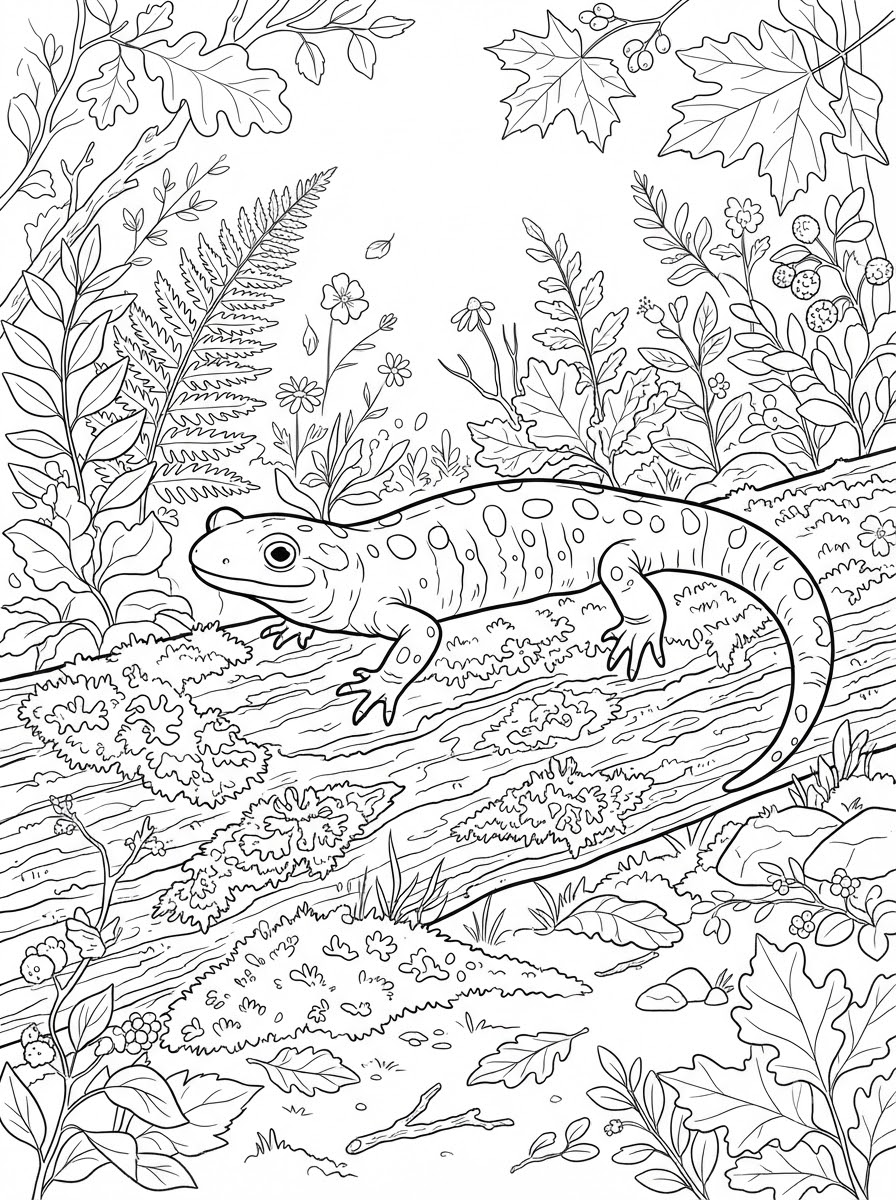
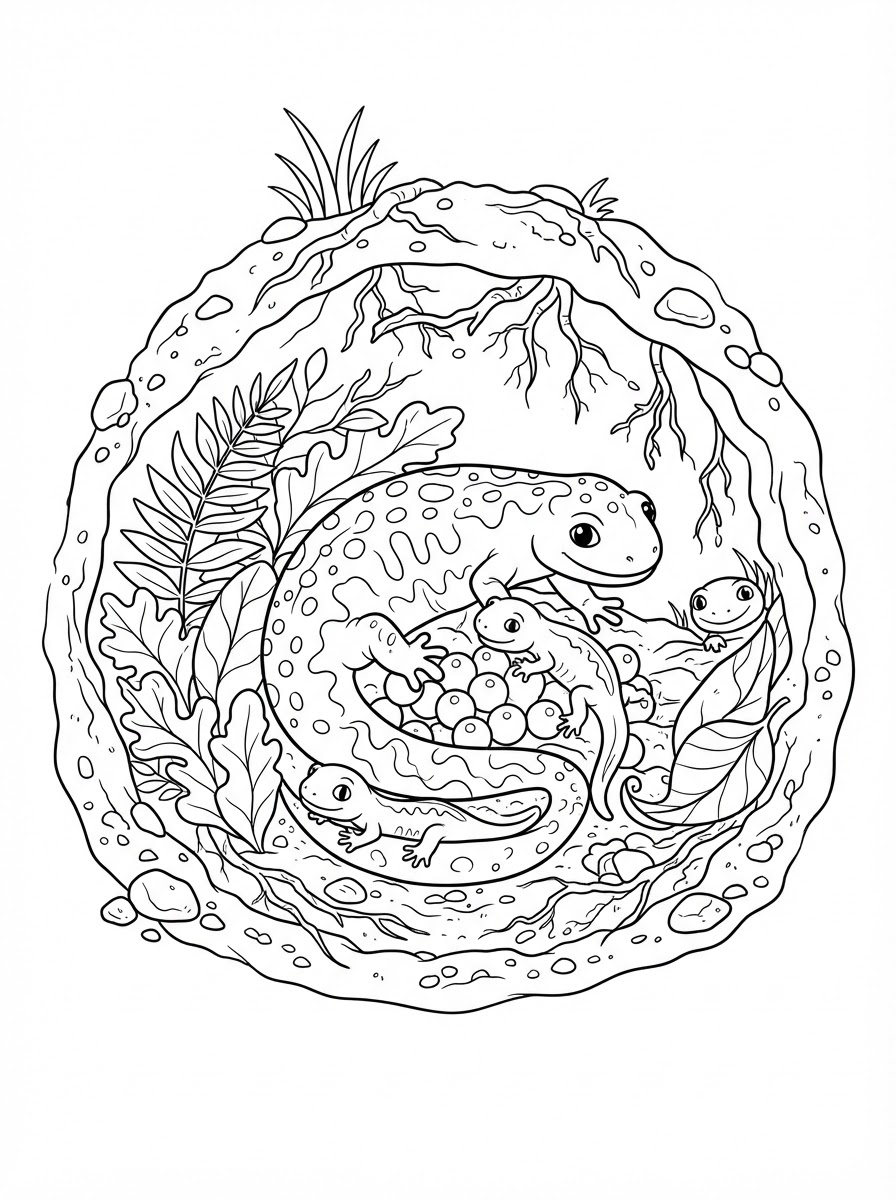
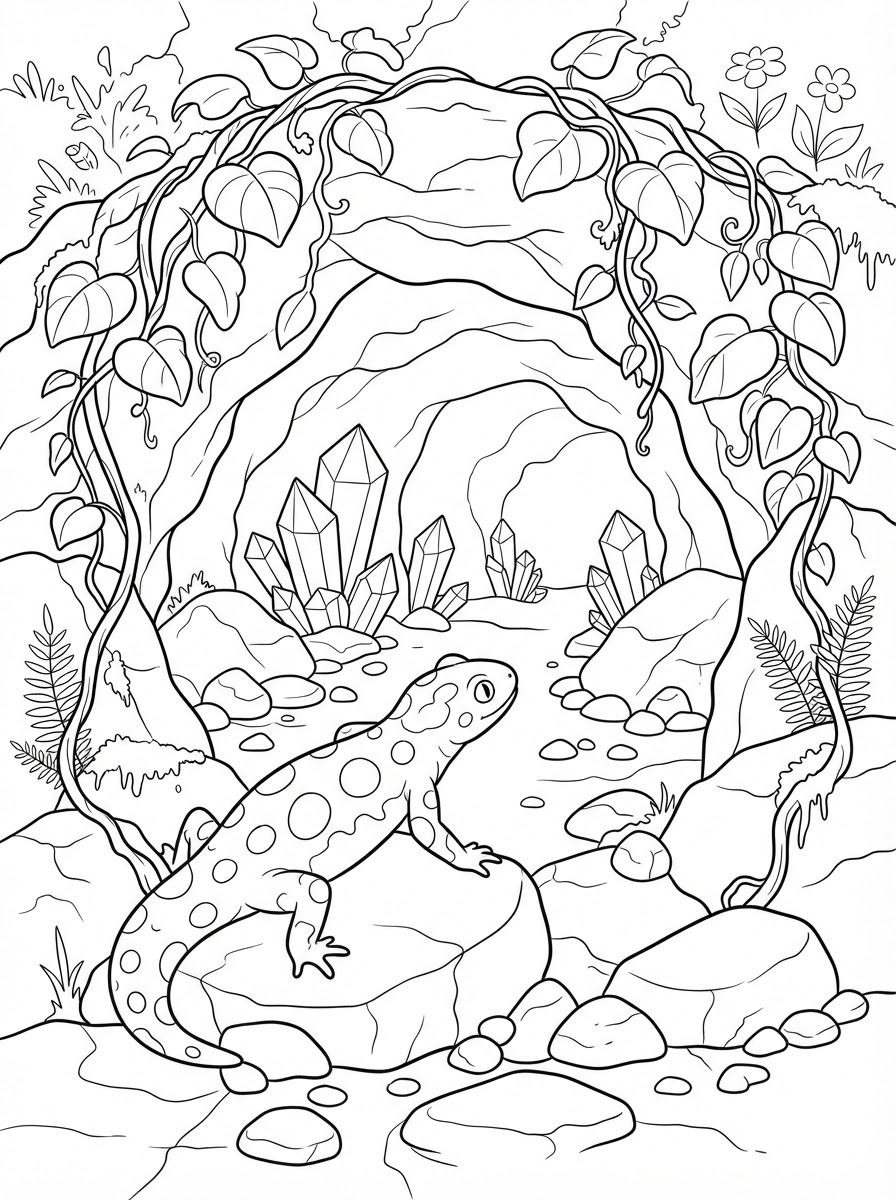
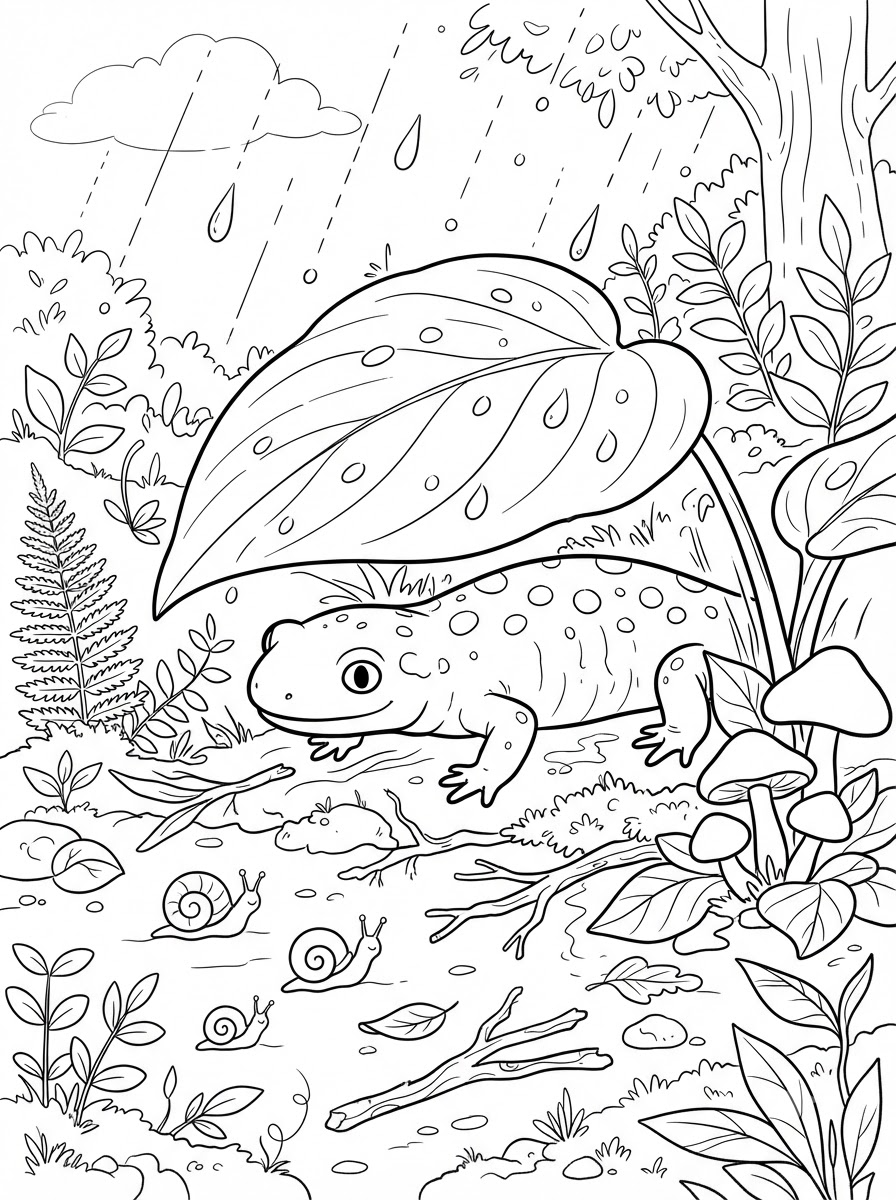
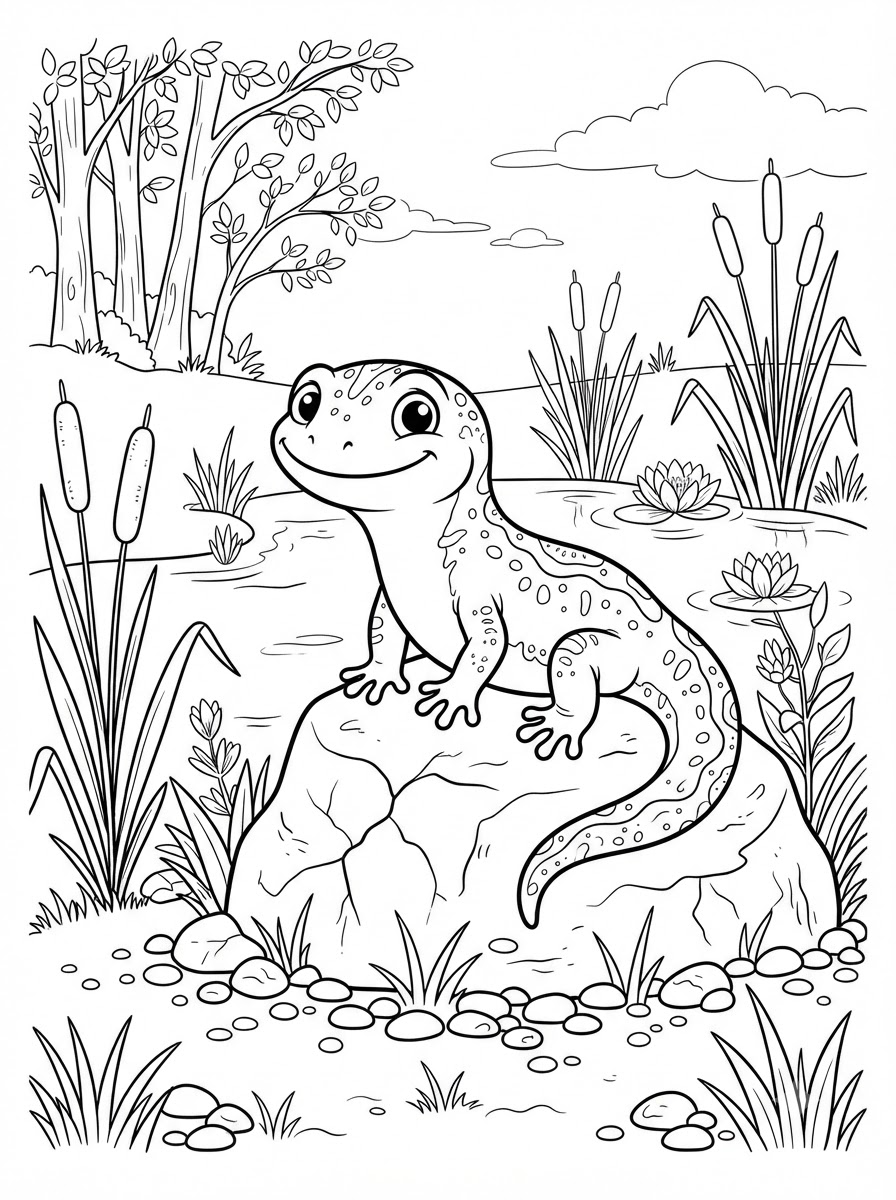
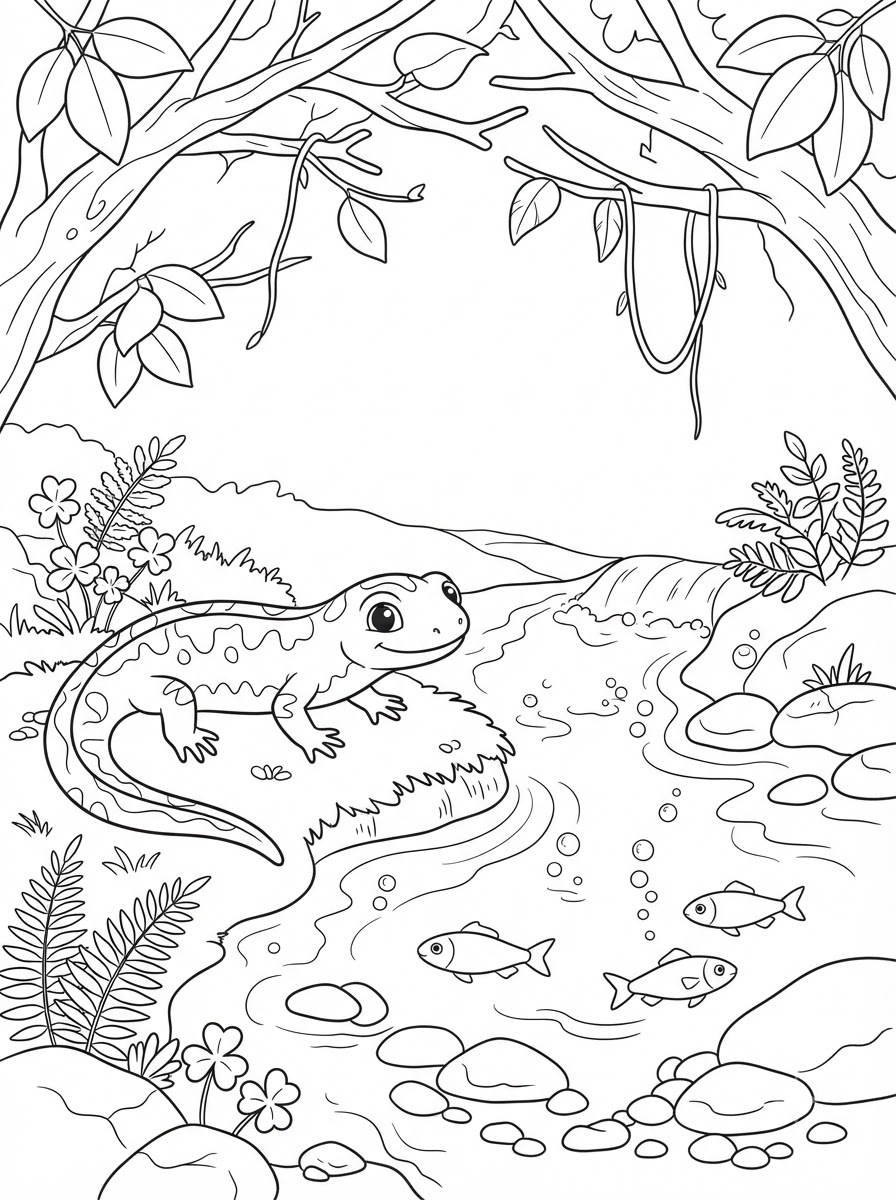
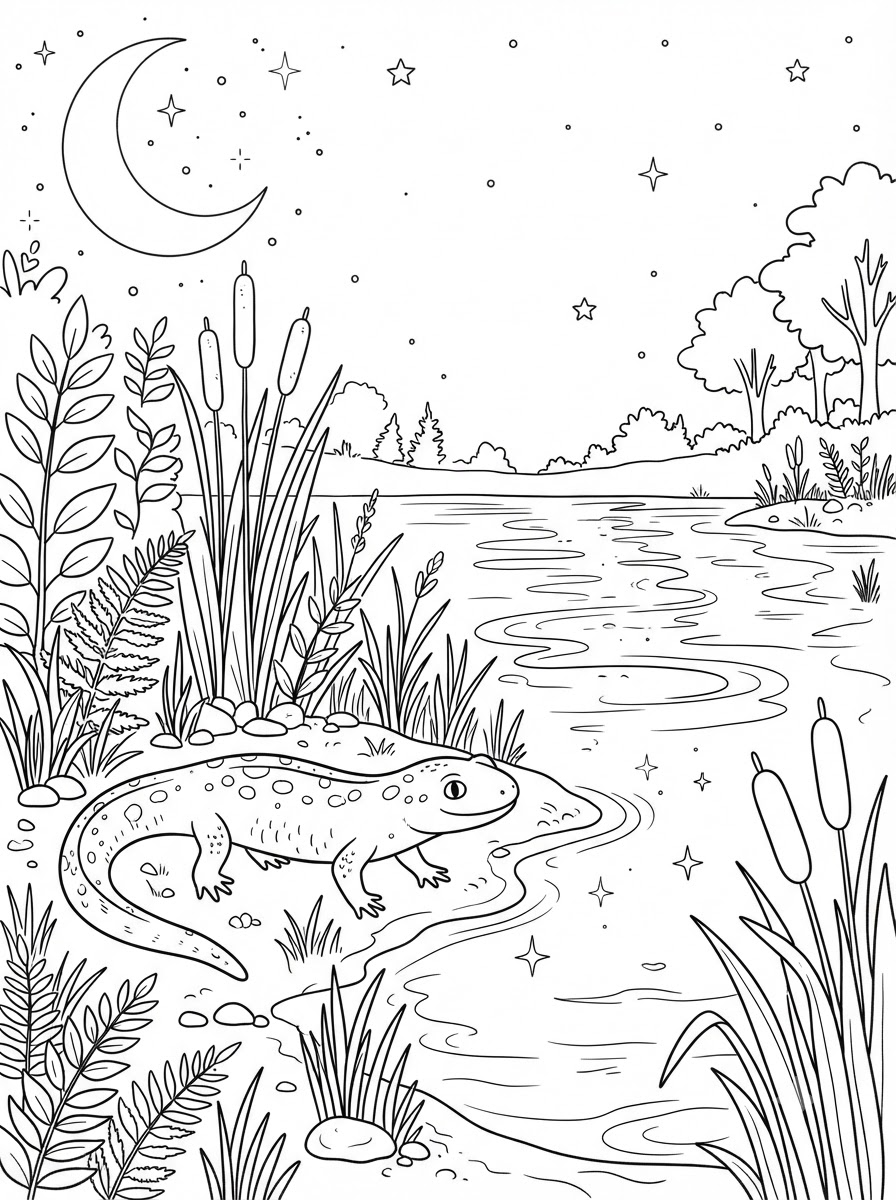
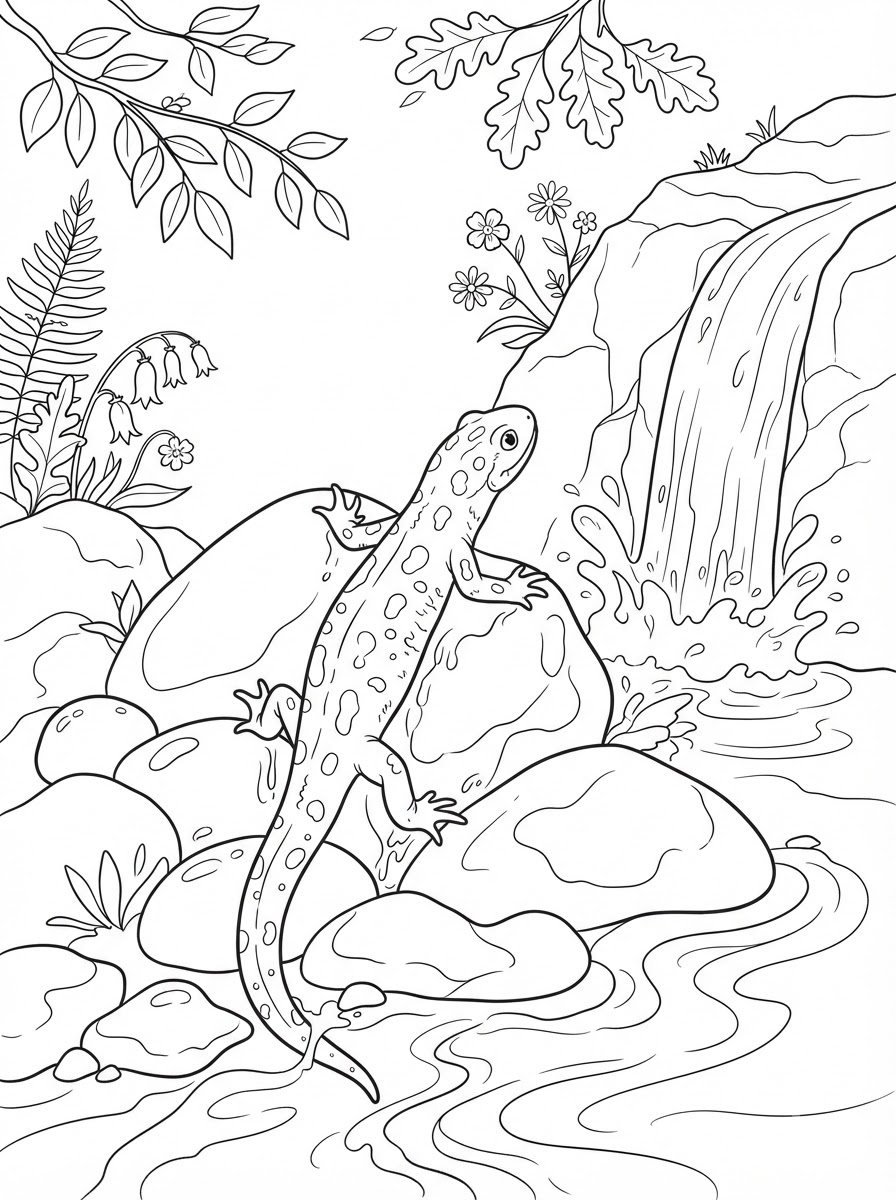
The salamander is small, curious, and immediately recognizable thanks to its elongated body, long tail, and, in many species, the spots that decorate its skin. In this collection of salamander coloring pages su Disegnidacoloraremondo.com, children can encounter it in many interpretations: realistic salamanders among leaves and rocks, more tender and simple characters, spotted specimens and scenes inspired by damp woods.
Each child can choose the drawing most appropriate for their age and enjoy it directly online or download the images and print them in PDF format coloring pages with pencils, markers, or crayons.
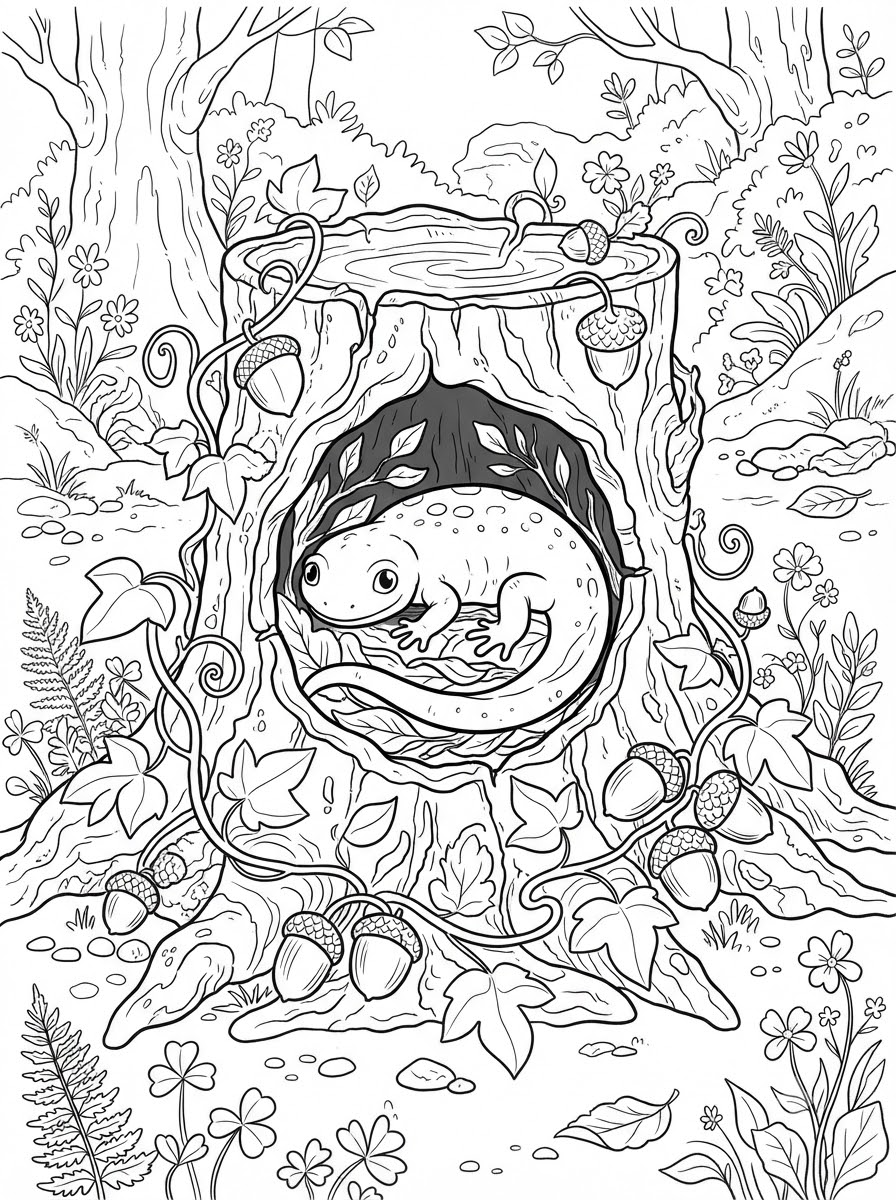
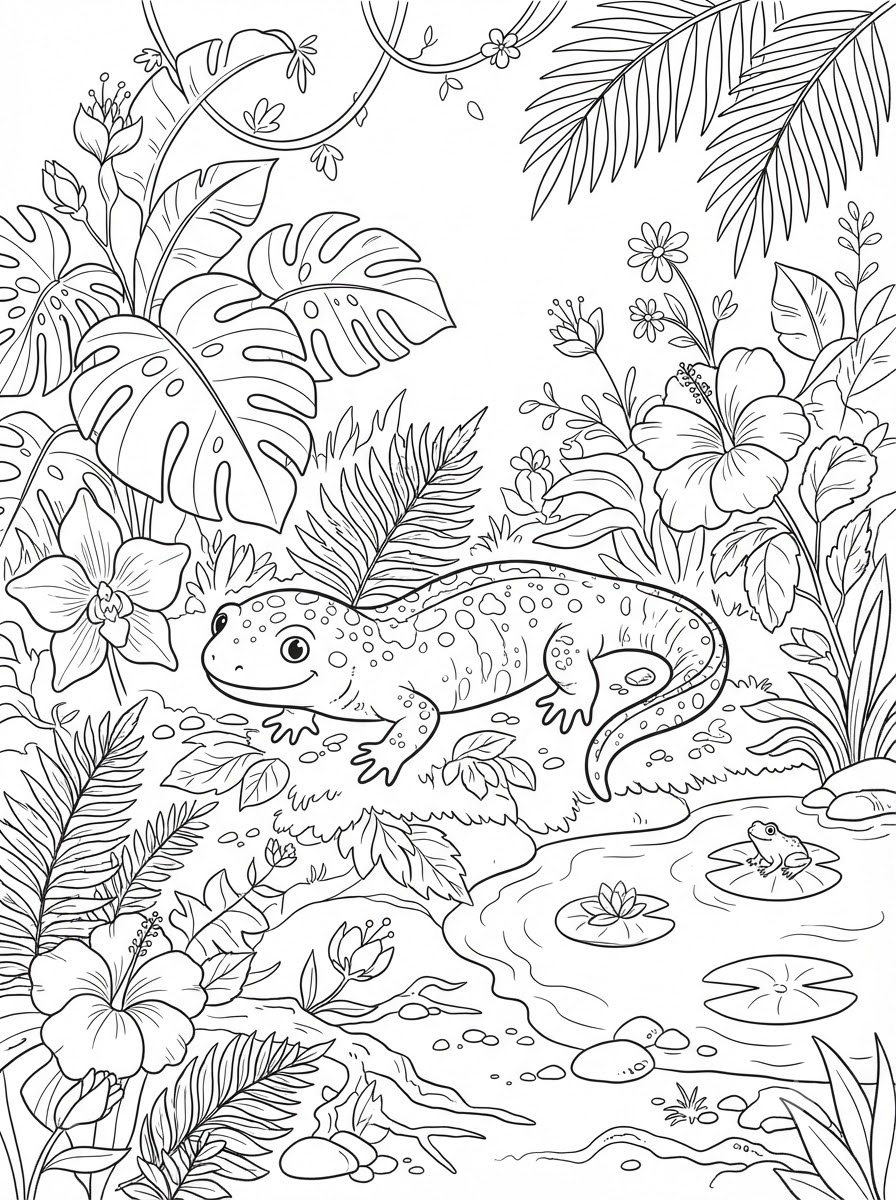
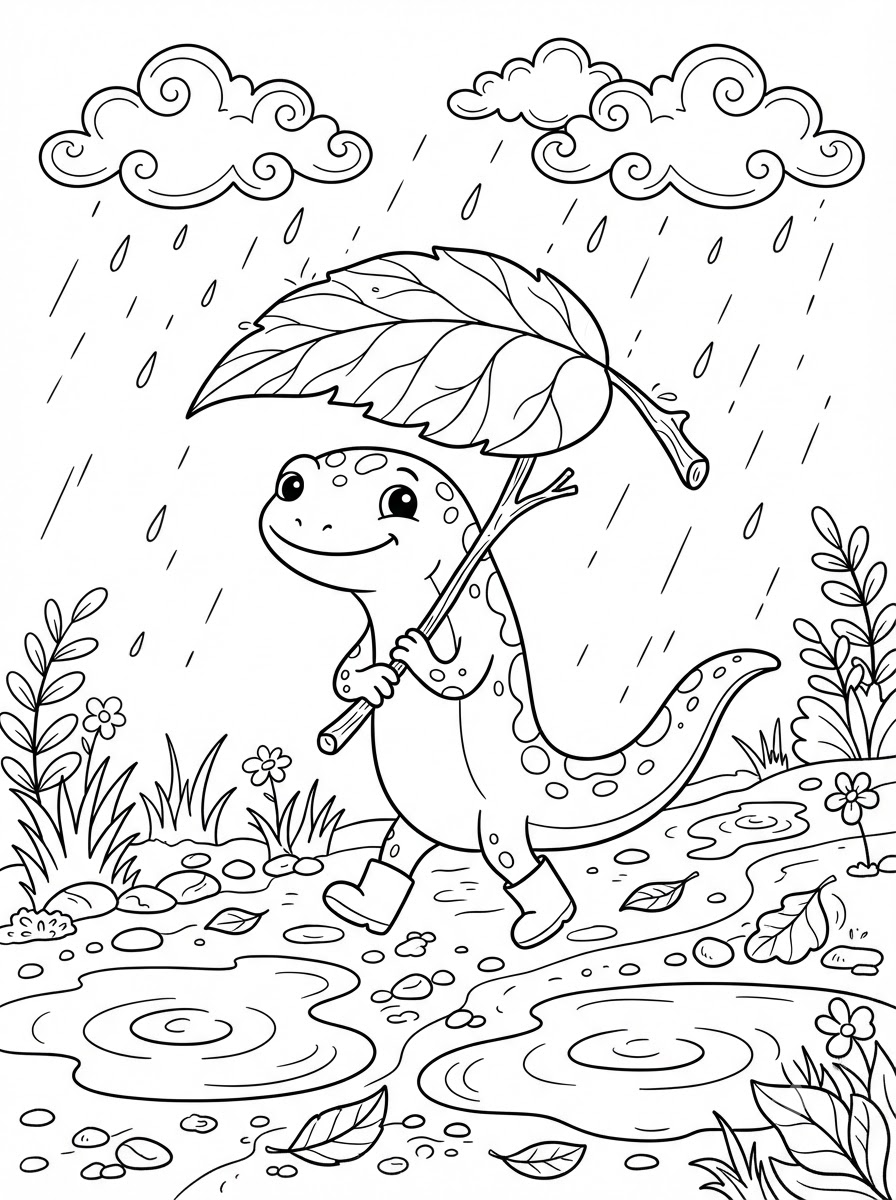
My experience drawing a salamander
When I prepare a subject like this, I almost always start with the silhouette. I've found that a salamander works very well even with just a few elements: four short legs, a flowing tail, and a simple profile are enough to make it recognizable.
For younger children, I prefer broad lines, large blobs, and simple backgrounds. In more detailed pages, however, I like to work on the textures of skin, wet leaves, tree trunks, and small irregularities in the ground. It's a surprisingly versatile subject: it can become tender and almost cartoonish or take on a naturalistic look without losing clarity.
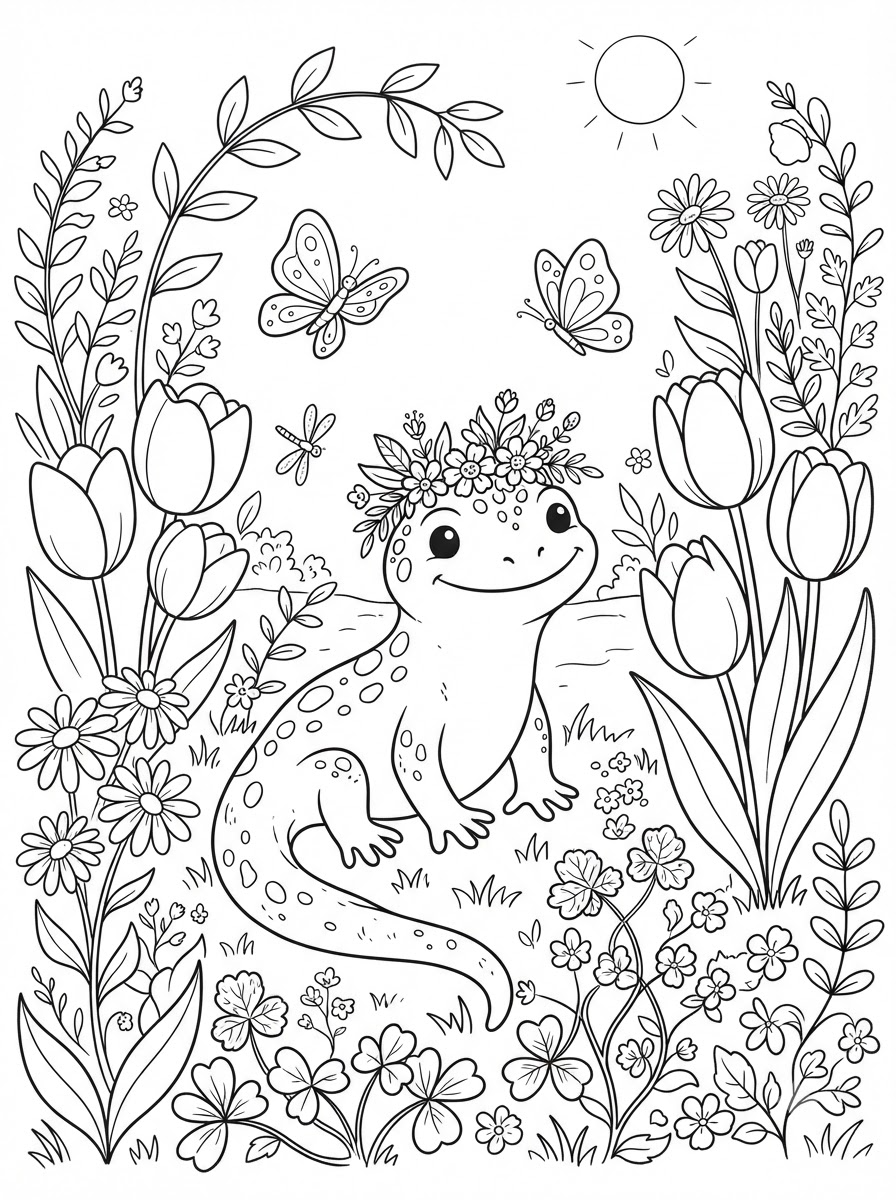
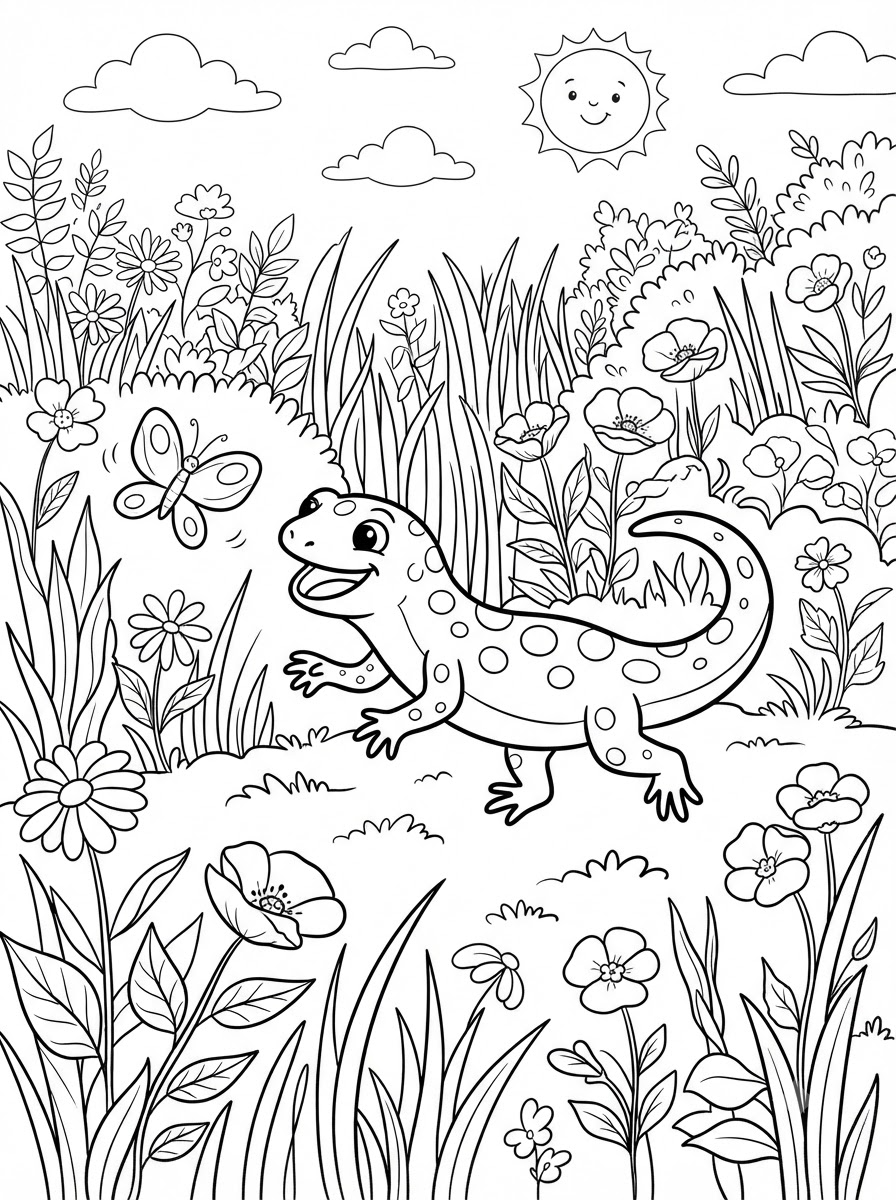
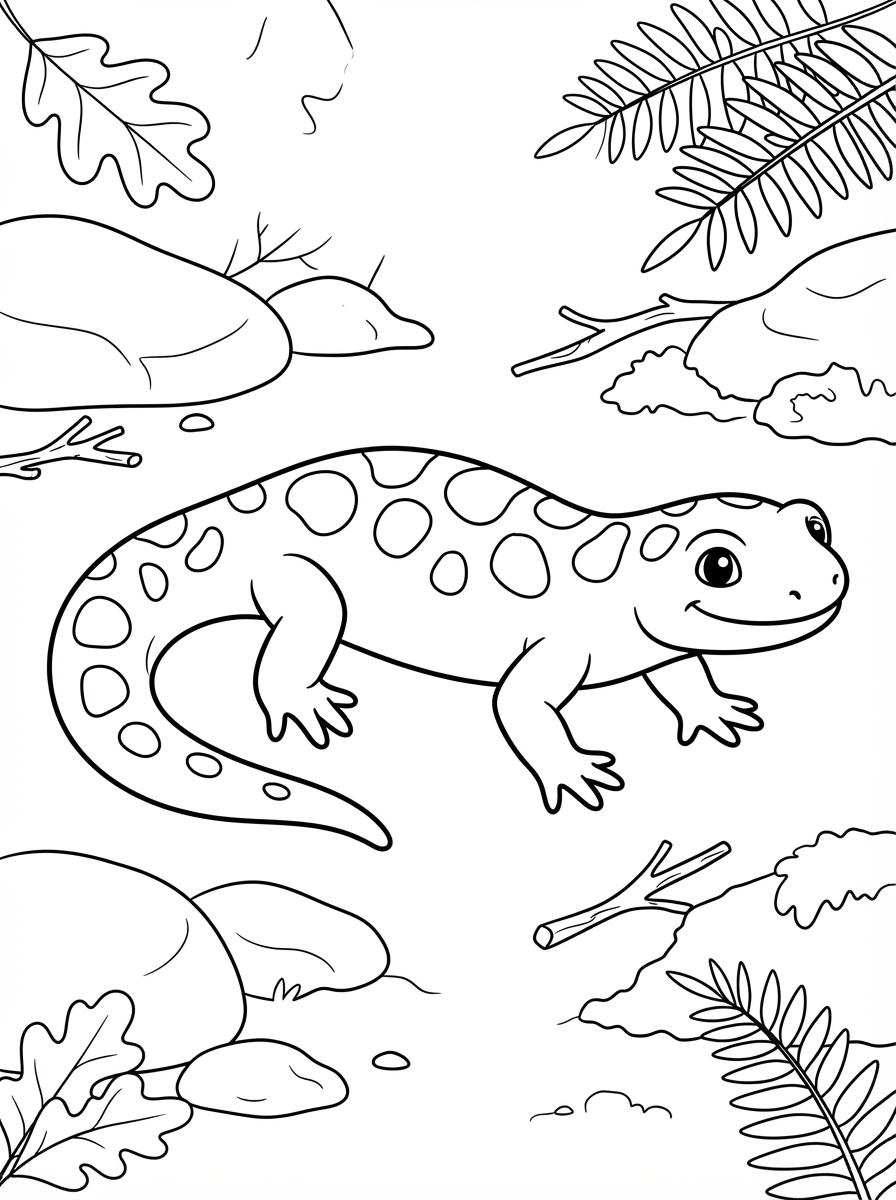
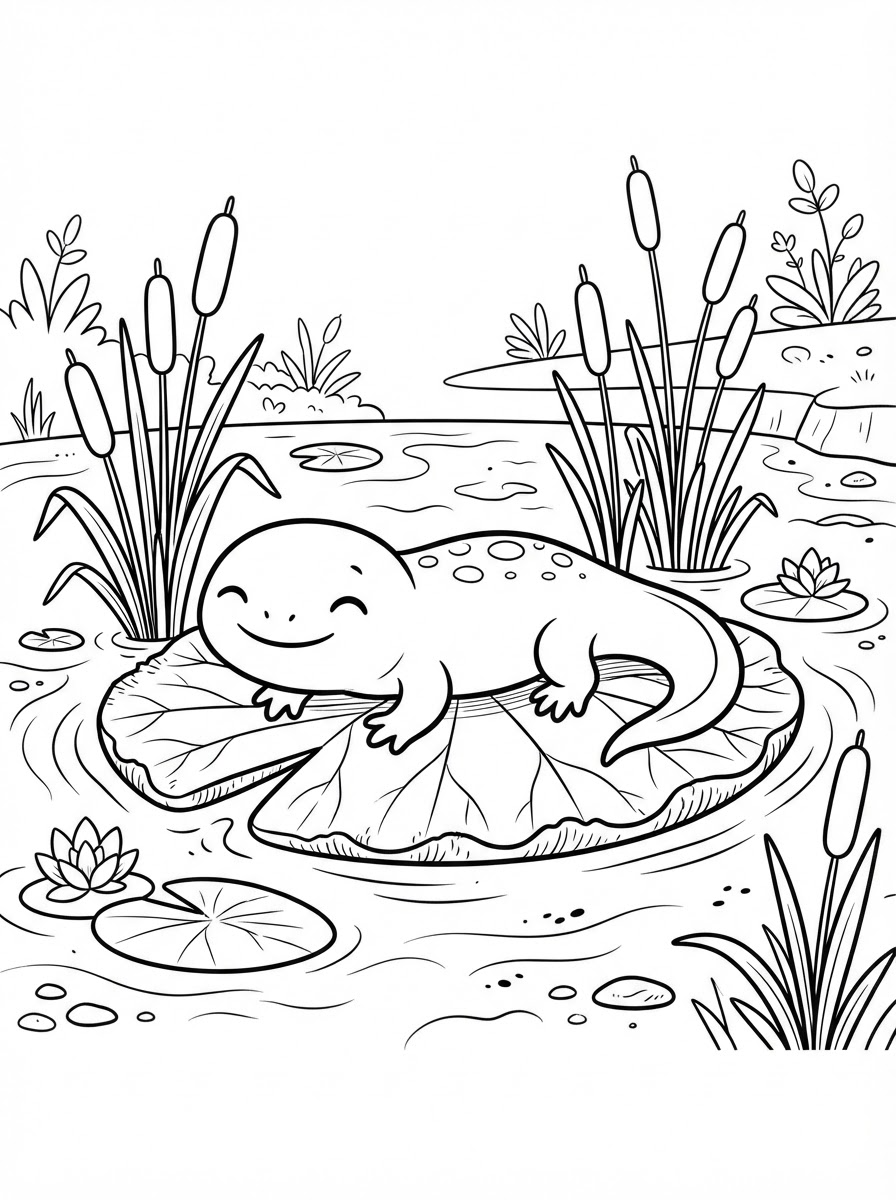
How coloring pages a salamander creatively
A little trick specific to this animal is not to fill in all the spots in the same way. Leaving some areas white or alternating different shades makes the body easier to read.
The fire salamander, for example, is famous for the stark contrast between its dark body and its yellow or orange markings. But drawing doesn't always have to be natural: a purple, blue, or green salamander can transform into a charming, fantastical creature.
For backgrounds, I recommend soft greens, browns, grays, and blues, so the little amphibian remains the protagonist of the page. Those who enjoy comparing shapes, colors, and camouflage strategies can also explore the chameleon coloring pages, another perfect theme for experimenting with original color combinations.
Interesting facts about salamanders that make the drawing even more interesting
Salamanders are amphibians, although from a distance they may resemble lizards. One important difference is their skin, which is generally smooth and scaleless.
Many species prefer cool, humid environments, such as woods, streams, and leafy areas. An interesting detail to observe while coloring is the tail itself: it's not just decorative, but can take on different shapes depending on the species' lifestyle.
Even bright colors can serve a purpose. In some salamanders, they function as a visual signal to deter predators. This makes spots, stripes, and contrasts not only attractive coloring pages, but also useful for telling a story about the animal.
Choose your favorite salamander
Explore our salamander coloring pages, choose from simple, silly, or more realistic versions, and begin your creative adventure. You can color online, download the pages for free, or print them as PDFs. Prepare your favorite colors and transform each little salamander into a unique character!

Valentino is our creative chameleon! His style adapts to a variety of themes and always manages to capture the essence of each subject. He knows how to masterfully move from tender and delicate pages for the little ones to more dynamic illustrations for the older kids. “His versatility makes him the collection Disegnidacoloraremondo.com always surprising and full of inspiration.